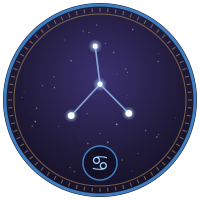
The Moon at home: what domicile means in Cancer
Traditional astrology describes a planet as being in domicile when it sits in the sign it rules. The Moon rules Cancer, a water sign, cardinal in quality, so a Cancer Moon is the placement where the Moon's themes of mood, memory, nurture and belonging are expressed most openly and with the least translation.
In ordinary terms, that often means emotions that are easy to access and hard to hide. A person with this placement may tear up at a commercial, hum their grandmother's song while washing dishes and know within seconds that a friend's cheerful voice on the phone is covering something sad.
Being at home does not make life easy. A Moon that feels everything also absorbs everything, and the work is usually about choosing what to carry rather than carrying all of it.
A small test of this placement is how quickly a room's mood registers before anyone speaks; the sensitivity is a tendency to notice atmosphere, not a claim about psychic ability.
Inside a Cancer Moon: tides, memory and the shell
Mood moves like a tide. Some days the feelings are high and close to the surface, other days they pull back, and the person goes quiet and protective. The pattern is not random; it often follows the atmosphere around them, who is in the room, how safe it feels and whether anyone has said something sharp.
Memory is a signature feature. A Cancer Moon may recall the exact sweater someone wore on a particular birthday, the smell of a childhood kitchen or an offhand remark from ten years ago. Nostalgia comes easily, and objects often carry feeling: a chipped mug, an old ticket stub, a drawer of cards.
The shell is real too. When hurt, this Moon tends to retreat first and explain later, or not at all. Moving sideways toward the problem, like a crab, is common; the point is to approach without being exposed.
Quiet evenings, a familiar blanket and a slow start to the morning tend to help the tide settle when it runs high.
What makes a Cancer Moon feel secure
Walk into the home of someone with this Moon and you can often see their needs: soft lighting, cushions, a full fridge, photos on the shelves, a plant in the window. Home does not have to be large, but it does have to feel like a nest, a place where shoes come off and the guard comes down.
Security also means emotional safety. Being asked how the day really went, being remembered and being met with a gentle tone make a huge difference. Sarcasm, harsh criticism and sudden silence from someone close can sting more than the speaker intends.
Food is a love language here. Cooking for people, or being cooked for, is a quiet way of saying you matter. A Sunday pot of soup can do more for this Moon than a night out.
Small rituals count for more than big gestures: a regular Sunday call to a relative, the same mug every morning, a shelf of keepsakes that stays exactly where it is. Moves, remodels and changes to the household can feel larger to this Moon than the calendar suggests, so extra gentleness around them helps.
Loving with a Cancer Moon: devoted, protective, sensitive
After a date that went well, a Cancer Moon may send a warm message that same night, then spend the next day gently checking whether the reply feels equally warm. Interest builds through small caring acts: a text asking if you got home safely, a snack packed for the road, a memory of what you said last week.
In a long relationship, this Moon tends to want a partnership that feels like family: shared rituals, inside names for things, holidays planned together. It is loyal and often fiercely protective, and it can be hurt by indifference more than by open disagreement.
The growth edge is saying the need aloud. A Cancer Moon may expect a partner to sense when something is wrong, then feel disappointed when they do not. Practicing sentences like 'I'm feeling a bit fragile tonight and could use some company' gives the other person a clear map, and makes tenderness easier to give.
Family, friends and the caretaker role
Friends with a Cancer Moon are the ones who keep a spare phone charger, remember your mother's name and show up with groceries after a hard week. They make a group feel like a household. They also tend to be the keeper of old photographs and shared stories.
Family ties are often central, whether the family is biological or chosen. As a parent, the style is typically warm and attentive, with a strong instinct to shield children from hurt. Learning when to let kids stumble, so that they build their own resilience, is a recurring theme.
A pitfall is over-giving. When care becomes a way of earning a place, resentment may build quietly. Allowing others to take a turn, and receiving help without a ledger, is a skill that makes the nurturing sustainable.
At work and among acquaintances the same instincts appear in a lighter form: a colleague who notices when someone skips lunch, or who quietly remembers a new parent's due date. Friends often say this person makes the office feel less like an office. The protective streak can also make it hard to say no to a request, so a habit of pausing before agreeing is worth building.
Under stress: moodiness, retreat and how to refill
Stress tends to show as withdrawal, irritability that comes in waves, comfort eating or a sudden need to be home. A bad day at work can leave a Cancer Moon curled on the sofa, replaying a single comment from a colleague long after everyone else has forgotten it.
Recovery depends on safety and rhythm. Sleep, a familiar meal, a call with a trusted person and time near water, even a long shower, often help. Many people with this placement find that tidying a small space, like a desk or bedside table, gives a sense of control when larger things feel uncertain.
It helps to remember that a mood is a visitor, not a verdict. Writing down what happened, then what the feeling is telling you, separates a passing wave from a real need for change.
If the mood lingers for more than a couple of weeks, or sleep and appetite change sharply, talking to a doctor or a counselor is a better next step than any chart, because astrology describes tendencies and cannot replace support from people who can help in practice.
How a Cancer Moon blends with your Sun sign
A fire Sun (Aries, Leo, Sagittarius) shows a confident face while the Moon keeps the softer feelings tucked inside, a bit like a loud front door with a cozy living room. An earth Sun (Taurus, Virgo, Capricorn) blends well: practicality on the outside, tenderness underneath, usually showing up as acts of service.
An air Sun (Gemini, Libra, Aquarius) may look detached or witty, while the Moon runs a rich inner emotional life that few people see. A water Sun (Cancer, Scorpio, Pisces) is deeply feeling all around, which brings empathy and intensity in equal measure, and a real need for time alone to sort through it.
In every combination, the Sun is what people see first and the Moon is what they learn after spending a rainy weekend with you.
Two examples show the range. A Cancer Moon under a Capricorn Sun may present a composed, businesslike face and unwind only in a very familiar kitchen, while a Cancer Moon under a Gemini Sun may talk lightly about feelings that run much deeper than the words suggest. In both cases the Moon is the part that settles first when the right person walks in.
Strengths and growth edges of the Moon in Cancer
Strengths include empathy, loyalty, intuition about people, emotional memory and a genuine talent for making others feel at ease. When a friend needs a shoulder, this Moon tends to know before the call comes.
Growth edges often involve boundaries and letting go. Holding on to old hurts, absorbing other people's moods or avoiding conflict by going quiet can all keep the Moon in a loop. Naming a limit kindly, or sharing a feeling when it first appears, tends to be gentler on everyone.
The best tool is probably self-compassion. This Moon is good at caring for others, and the lesson is to offer the same warmth inward, treating its own sensitivity as information rather than as a flaw.
Examples of the same strengths in daily life include remembering which friend is nervous about an appointment, keeping family traditions alive and noticing the colleague who has gone quiet. Each of these is also a place where the edge appears: tracking everyone else's feelings can leave little energy for your own, which is why a regular, protected hour for yourself is not selfish but practical. Read all of this as a pattern that many people recognize, not a fixed description of any individual.
Do I have a Cancer Moon?
You cannot read it from your Sun sign, because the Moon moves into a new sign about every 2.5 days. Entering your birth date, time and place into the calculator above gives your Moon sign right away, with everything computed in your browser; the last chart is remembered on this device until you press Forget my data.
If you were born on a day when the Moon changed signs and you do not know the hour, the calculator flags that two signs are possible. Look for a birth certificate or ask family, and in the meantime read both descriptions; the one that matches how you actually recover from a bad day is often the answer.
Once you have the result, read it next to your Sun sign and your rising sign, since the Moon is only one voice in a chart. If the description fits some days and not others, that is normal: the Moon describes your emotional default, and context, upbringing and other placements shape how it shows. The page is a starting point for reflection, not a verdict, and it is not a substitute for talking things over with someone who knows you.
The Moon spends about two and a half days in each sign. To see whether the Moon is in Cancer right now and when it gets there next, open Moon sign today.
Frequently asked questions
What does a Cancer Moon mean?
A Cancer Moon points to deep, protective and memory-rich emotions. Security comes from home, family, food and feeling understood. People with this placement tend to be intuitive, caring and sensitive to atmosphere. The main growth edges are boundaries and not carrying everything alone. It describes tendencies, not fixed outcomes. Many people find it easiest to recognize in how they behave at home.
Is a Cancer Moon good?
No Moon sign is good or bad, but Cancer is the Moon's own sign, called its domicile, which means its themes of feeling, nurture and belonging come through easily. That ease can also mean strong sensitivity, so the work is learning to protect energy and speak needs clearly. It is a sensitivity worth understanding.
Is a Cancer Moon too emotional?
Feeling a lot is not a problem, it is a style. A Cancer Moon tends to notice and respond to emotions quickly, in itself and others. That becomes difficult only when moods run the day or feelings stay unspoken. Naming what you feel, taking breaks and building routines help the sensitivity work in your favor.
What is a Cancer Moon like in love?
Devoted, caring and protective. A Cancer Moon often shows love through cooking, remembering details and creating a sense of home, and wants to feel emotionally safe in return. It can be hurt by coldness or sarcasm. Saying needs aloud, rather than hoping a partner will guess, is the usual growth edge.
How common is a Cancer Moon?
It is as common as any other Moon sign. The Moon spends about 2.5 days in each sign and cycles through all twelve in roughly 27 days, so Cancer Moons turn up as often as the others. Because the sign shifts so often, the exact birth date and sometimes the time are needed to confirm it.
Which Moon signs match well with a Cancer Moon?
Taurus, Virgo, Scorpio, Pisces and Capricorn Moons often understand its need for security and care. Aries and Aquarius Moons are quicker and more independent, so they may need more translation. Compatibility depends on the whole chart and on communication, so treat Moon pairings as a starting point only. Gentle patience helps.
 The Chariot
 Your full birth chart
 Compatibility